
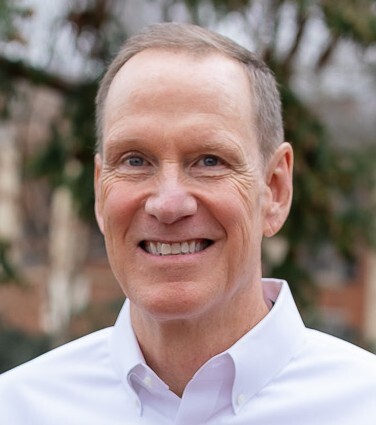
Chuck Marvin
Author of America 5.0 | Co-Founder, The Principled Capitalist
A veteran problem-solver applying construction-grade root-cause analysis to America’s division and inequality.
Categories
Talking points
- Structural vs. systemic causes of inequality
- How the federal tax code creates poverty traps
- The difference between values and principles
- The Prosperity Through Equality Program (PTEP)
- Applying engineering rigor to societal problems
- Breaking the cycle of political tribalism
The hook
The middle class has been bribed into defending a broken system.
Chuck Marvin argues that America’s division isn’t rooted in culture or capitalism. It’s a parasitic 70,000-page tax code that hands out “tax crumbs” the most marginalized will never see, turning citizens into guards of the elite.
Bio for your show notes
113 wordsChuck Marvin is an entrepreneur, construction consultant, and award-winning technical author with more than 30 years of experience solving complex problems through evidence-based analysis and principled decision-making. In 1994 he and his wife co-founded RSI, a consulting and design firm whose work spans dangerous industrial scenarios, prominent museums, and skyscrapers from Manhattan to LA. A former soldier in the 82nd Airborne Division and co-founder of The Principled Capitalist, Chuck now applies the same rigor to business, leadership, and societal challenges. His book, America 5.0: Ending Division, explores how principles, personal responsibility, and disciplined problem-solving shape both individual outcomes and society, and offers a mathematically viable framework to reduce division and break today’s tribalism.
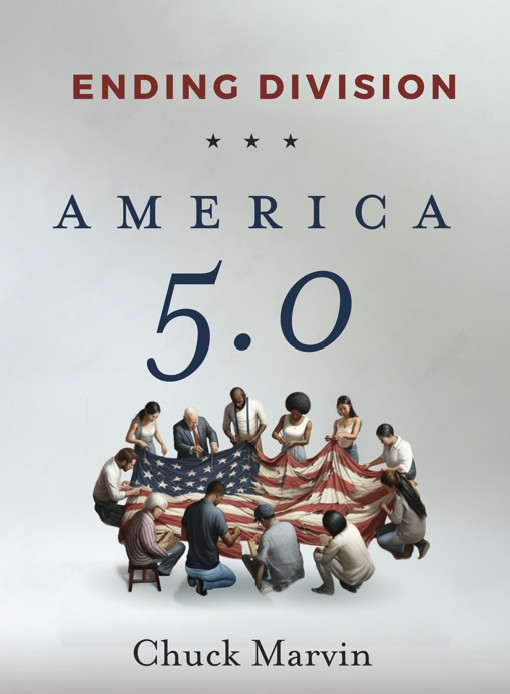
Featured book
America 5.0: Ending Division
Chuck’s award-winning book argues America has misidentified the source of its division, looking to culture and people rather than the structural rules that shape outcomes. It lays out a mathematically viable framework built on honesty, equality, and excellence. All profits are donated to organizations cited throughout the book.
View on AmazonLinks for your show notes
Copy these straight into your episode description or event page.